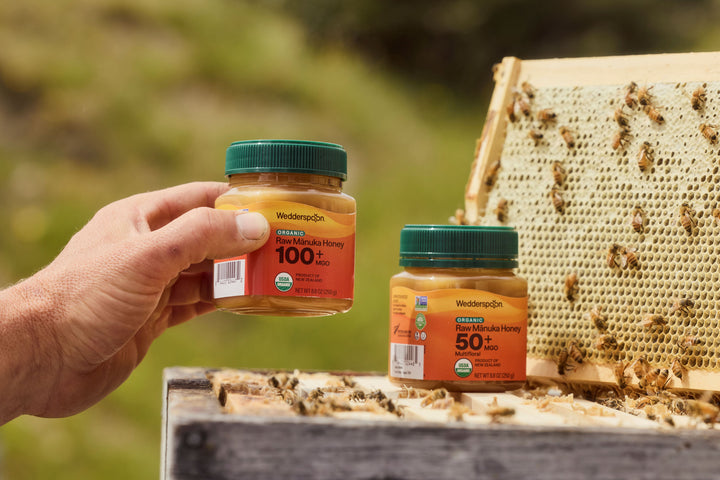
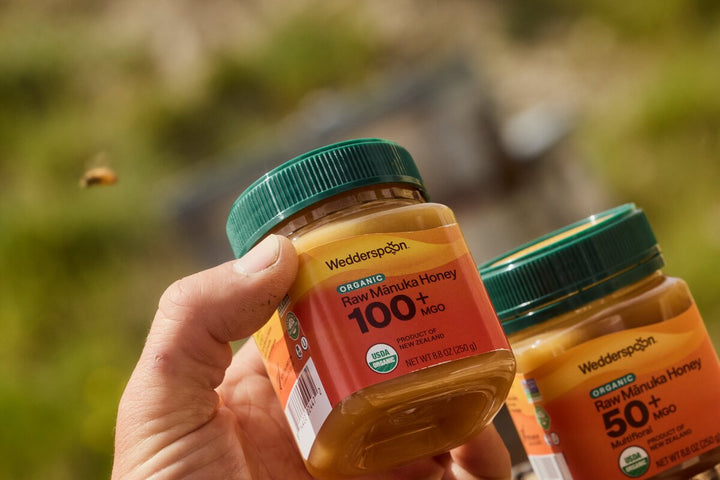
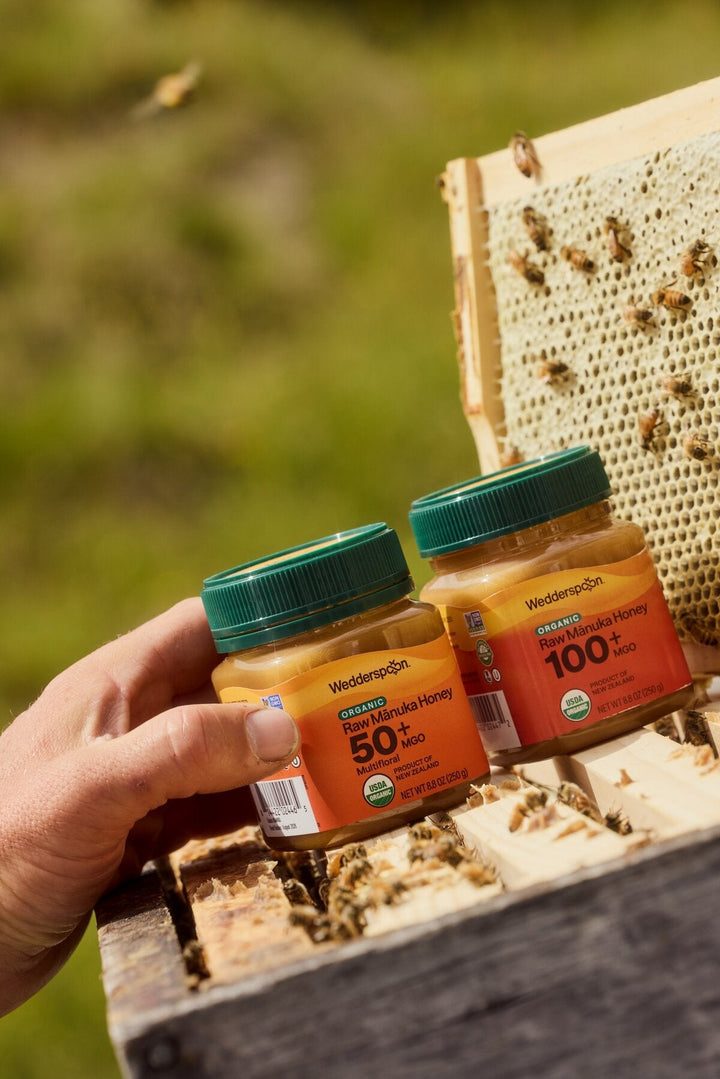
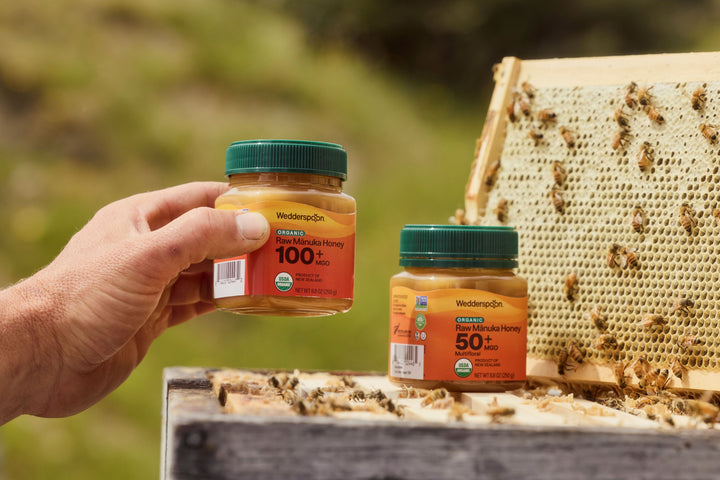
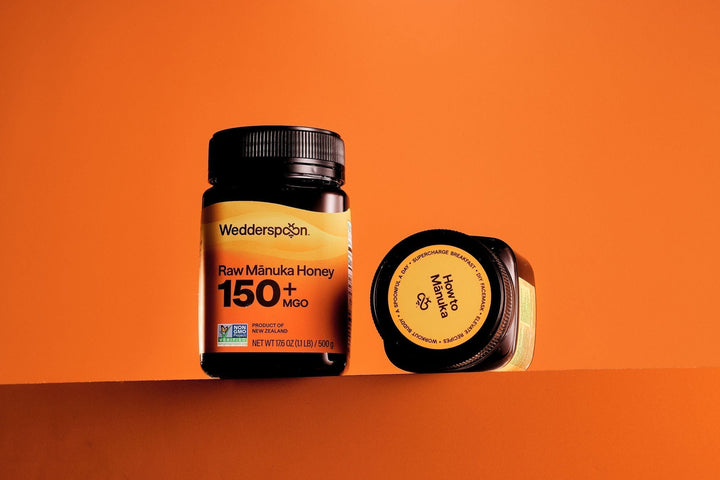
Turn over a jar of Wedderspoon Organic Mānuka Honey and you’ll find two small seals. They’re easy to skim past, but each one answers a different question about what’s in your jar, and neither one is something a brand can just decide to print.
Quick answer: Certified Organic Mānuka Honey carries the USDA Organic seal. That seal means the honey meets USDA National Organic Program standards and was certified by an accredited certifying agent. Non-GMO Project Verified means it passed the Non-GMO Project’s third-party verification. Neither seal measures strength; the MGO (methylglyoxal) number does that. Wedderspoon’s MGO 50+, MGO 100+ and MGO 150+ carry both seals.
Seal #1: USDA Organic
What it means
The USDA Organic seal means a product meets the standards of the USDA National Organic Program. It also means an accredited certifying agent has certified it. That agent is an independent organization the USDA authorizes to inspect and certify organic operations.
What it covers for honey
Organic certification looks at how the honey is produced and handled before it reaches the jar. It checks more than the label.
How it’s kept up
Organic certification isn’t a one-time stamp. Certified operations are inspected on an ongoing basis to keep it.

Seal #2: Non-GMO Project Verified
What it means
Non-GMO Project Verified means the product has been through the Non-GMO Project’s third-party verification program for genetically modified organisms (GMOs).
Why it’s a separate seal
Organic and non-GMO overlap, but different programs verify them. Carrying both means the honey has passed two separate checks.

What neither seal tells you
How strong the honey is.
Strength comes from methylglyoxal, the naturally occurring compound Mānuka Honey is graded on. That’s the MGO number on the front of the jar. A New Zealand government-approved lab independently tests every batch of Wedderspoon Mānuka Honey to set it.
So, a complete organic Mānuka Honey label tells you three things:
- How it’s produced (USDA Organic)
- How it’s verified for GMOs (Non-GMO Project Verified)
- How strong it is (MGO)
Which Wedderspoon products carry these seals?
- MGO 50+ Mānuka Honey: USDA Organic and Non-GMO Project Verified
- MGO 100+ Mānuka Honey: USDA Organic and Non-GMO Project Verified
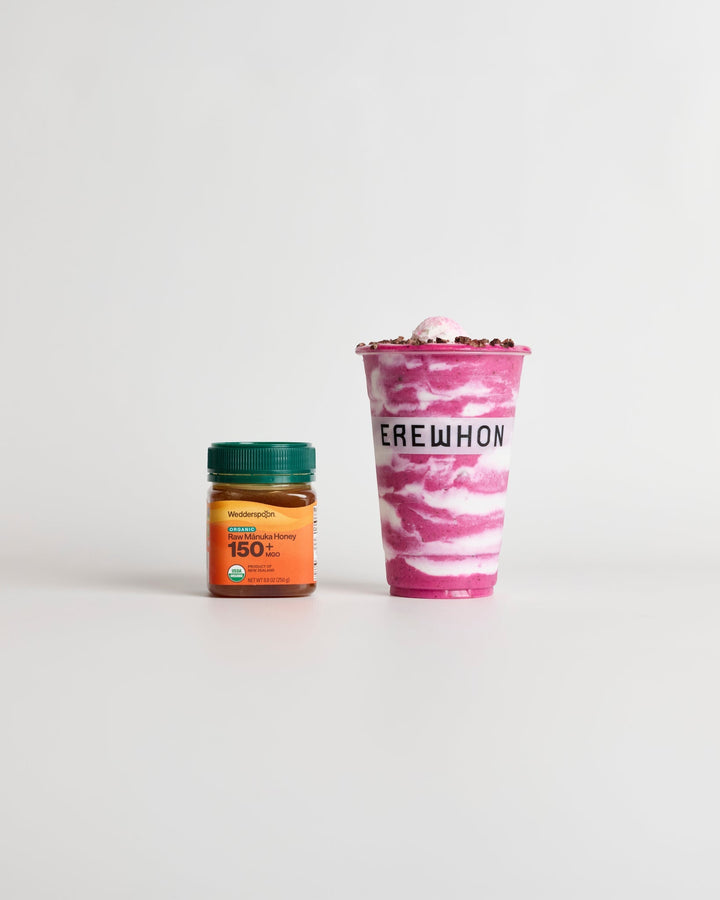
- MGO 150+ Mānuka Honey: USDA Organic and Non-GMO Project Verified
- MGO 400+ Mānuka Honey: Non-GMO Project Verified
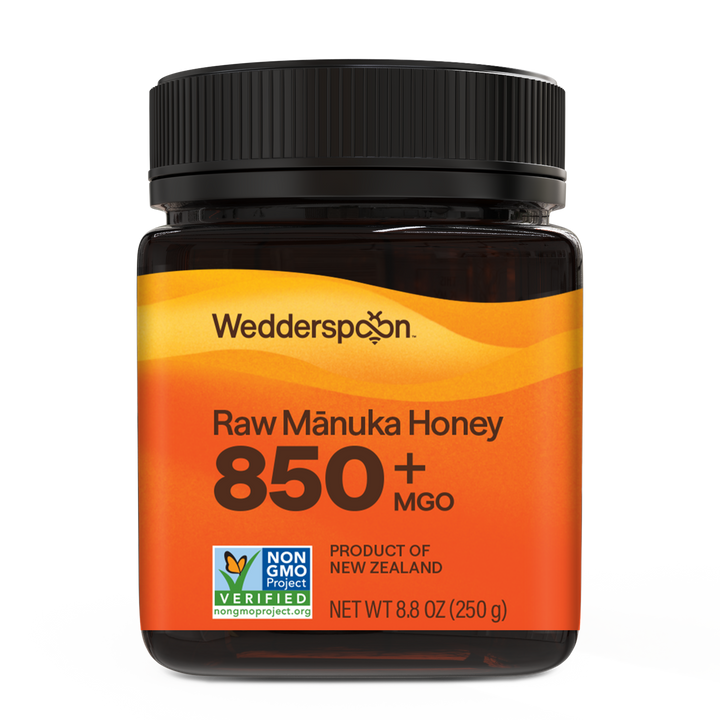
- MGO 850+ Mānuka Honey: Non-GMO Project Verified
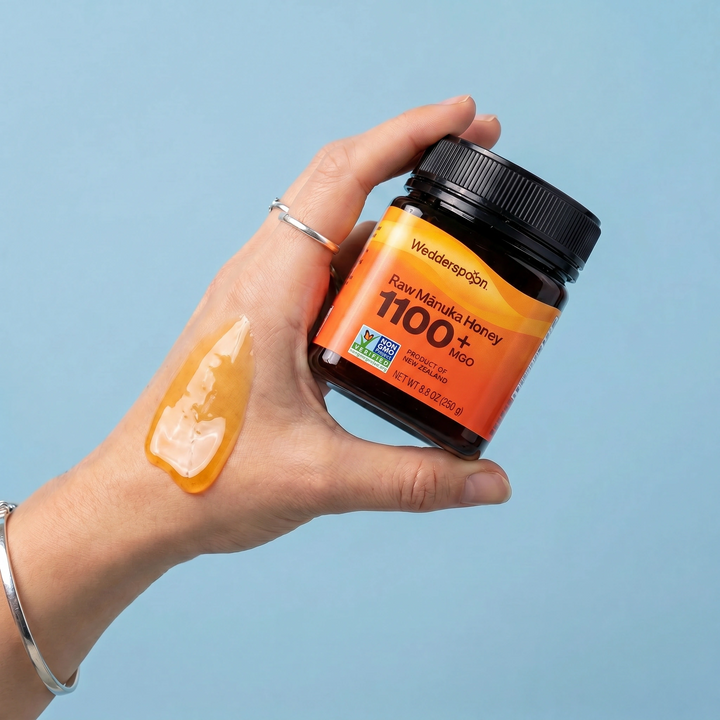
- MGO 1100+ Mānuka Honey: Non-GMO Project Verified
- Organic Mānuka Honey Drops: USDA Organic and Non-GMO Project Verified
Our higher grades, MGO 400+, MGO 850+ and MGO 1100+, are not currently certified organic.
How to read an organic Mānuka Honey label in five seconds
- Seal on the jar? USDA Organic, not just the word “organic.”
- Number on the front? An MGO rating.
- Origin? Sourced and packed in New Zealand.
- Raw? Never pasteurized.
Quick answers
What does USDA Organic mean on Mānuka Honey?
It means the honey meets USDA National Organic Program standards and was certified by an accredited agent.
What does Non-GMO Project Verified mean?
It means the honey passed the Non-GMO Project’s third-party verification for GMOs.
Do organic seals mean the honey is stronger?
No. The MGO number shows strength.
Which Wedderspoon Mānuka Honey is certified organic?
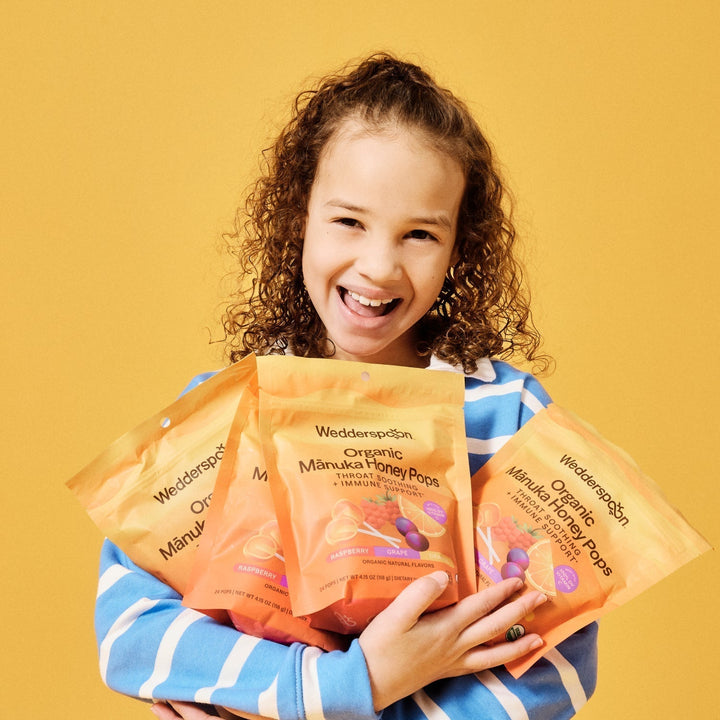
MGO 50+, MGO 100+ and MGO 150+, each in a 250g jar. Organic Mānuka Honey Drops and Organic Mānuka Honey Pops are also USDA Organic.
Two seals. One number. Reach for Wedderspoon.
Shop Organic Mānuka Honey | Certified, Not Just Claimed: The Best Organic Mānuka Honey, Jar by Jar
Share this post