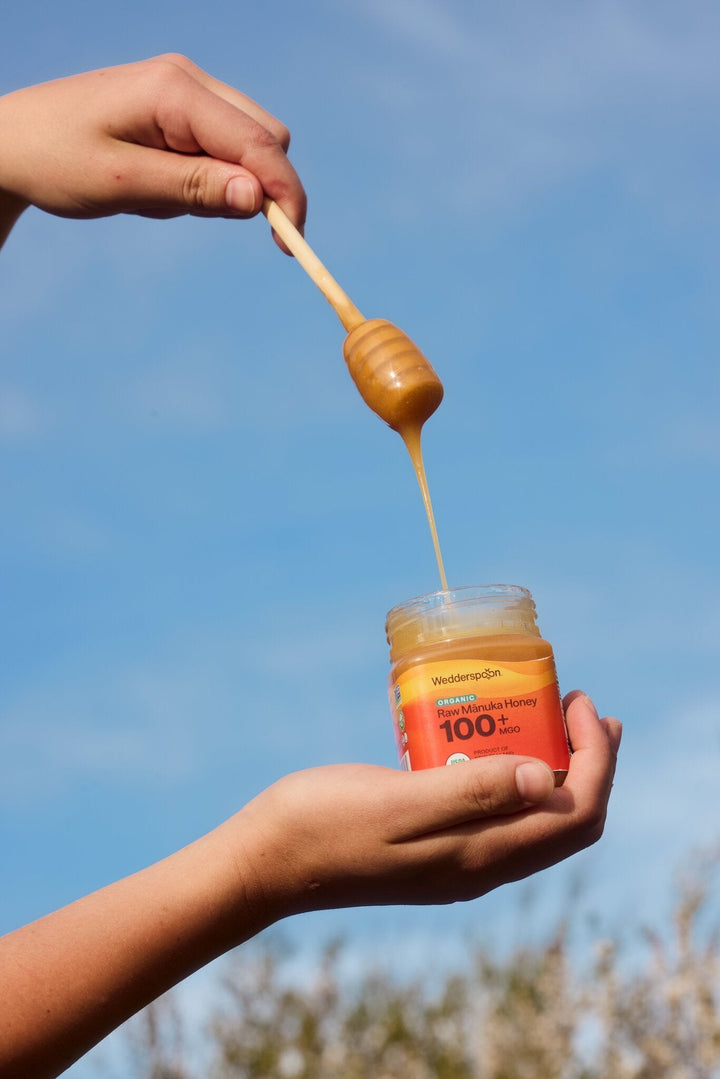
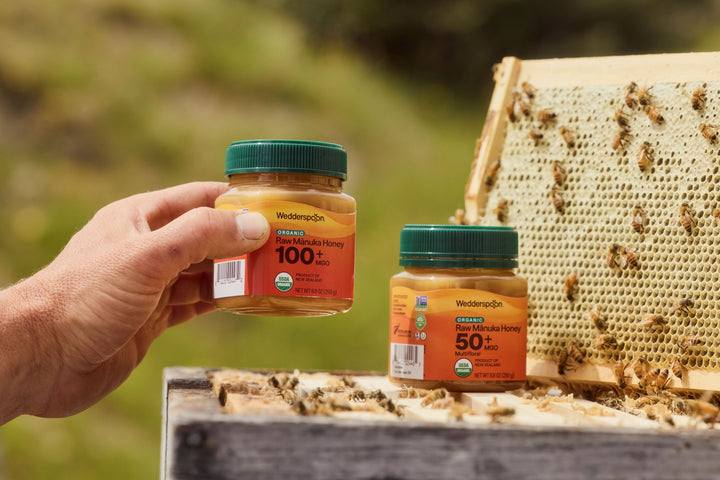
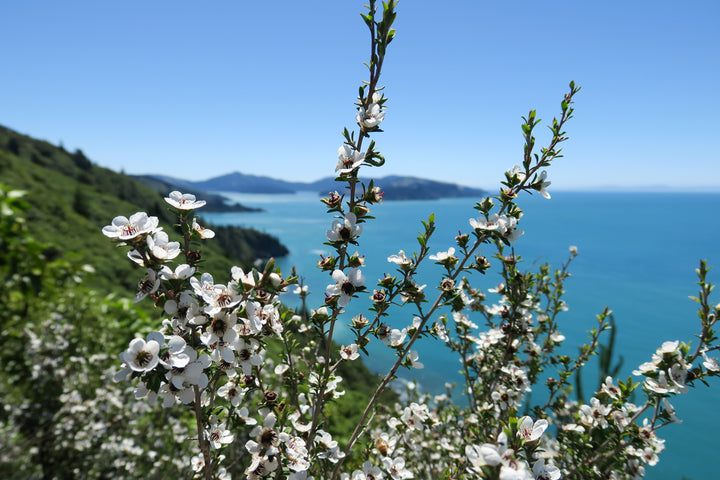
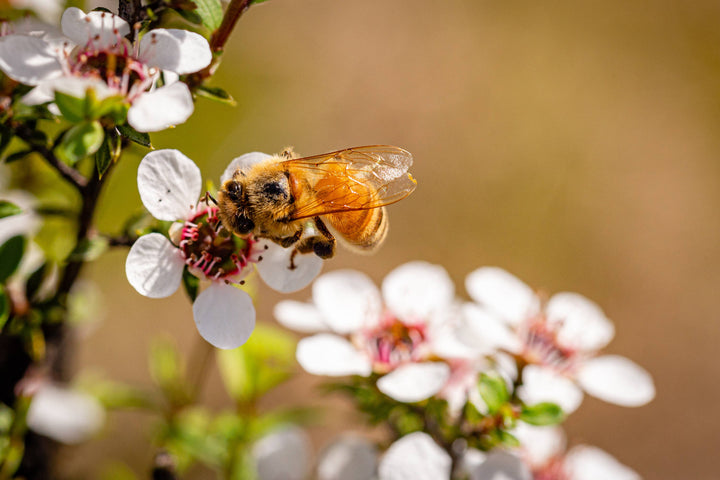
Mānuka Honey is honey made by bees that feed on the flowers of the Mānuka bush (Leptospermum scoparium), a plant that only grows wild in New Zealand. That's the short answer. The long answer... is a little more interesting.
We've spent a lot of time around Mānuka Honey, and we always get asked the same handful of questions: what makes it different from the honey in the bear-shaped bottle, what "MGO" means, and whether it's worth the price tag. Here are the facts.
It only comes from one flower, in one place
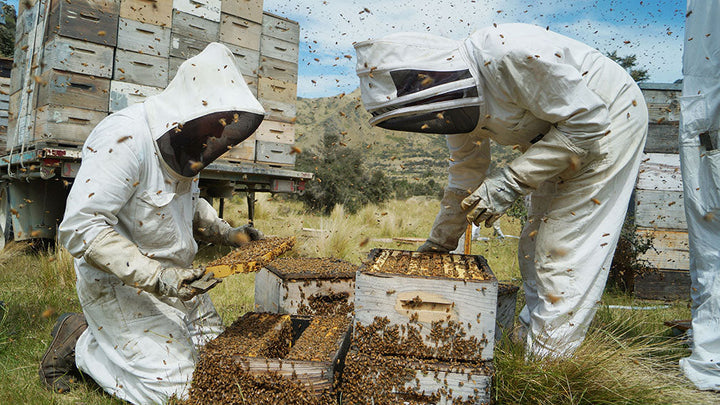
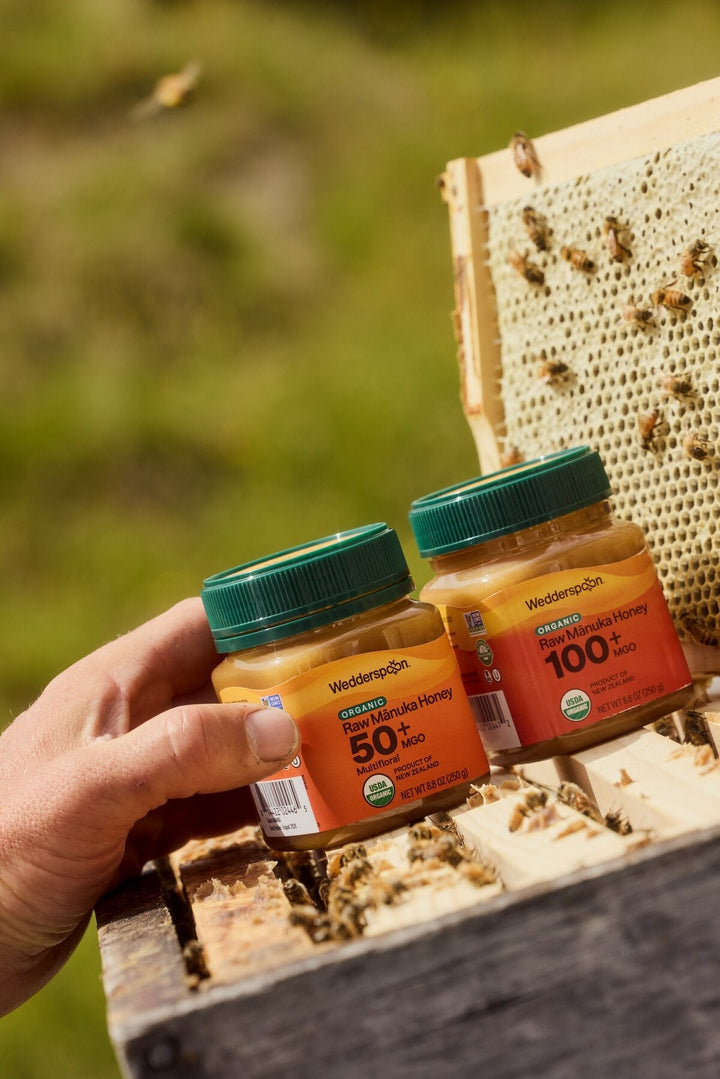
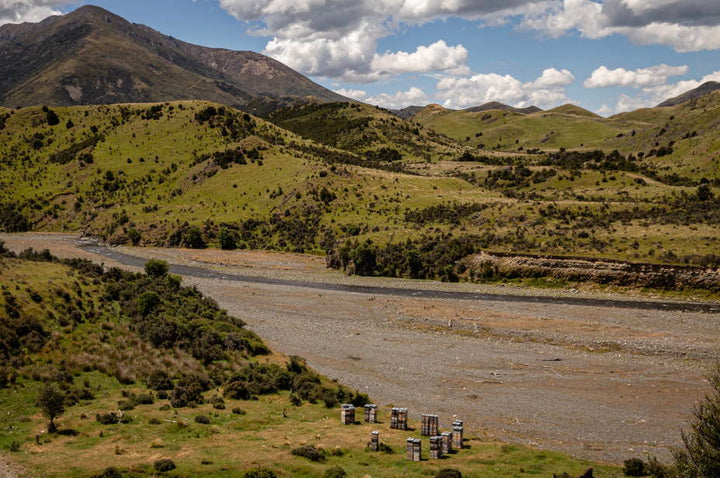
Mānuka Honey isn't a flavor or a marketing label — it's a honey that can only be made where the Mānuka bush grows, which is almost entirely New Zealand. The Mānuka bush blooms for just two to six weeks a year, in remote hill country. Some hives are so hard to reach that beekeepers get to them by helicopter or on foot. That narrow window is part of why it's rarer, and pricier, than clover or wildflower honey.
It's also not a new discovery. Māori communities used Mānuka for its therapeutic properties for centuries before Western researchers started studying it — and they have been studying it. Waikato University in New Zealand has researched Mānuka Honey for 20 years, across hundreds of published papers.
So what's actually in the jar?
This is where the alphabet soup starts. Four compounds get tested and talked about the most:
| Compound | What it is | Why it matters |
|---|---|---|
| MGO (Methylglyoxal) | The primary active compound | Responsible for the antibacterial strength; higher MGO = stronger effect |
| DHA (Dihydroxyacetone) | MGO's precursor | Naturally converts to MGO after harvest, so it helps predict how the honey's potency will develop |
| Leptosperin | An authenticity marker | Found only in Mānuka nectar — it can't be added or faked, so it's the clearest proof a honey is genuinely Mānuka |
| HMF (Hydroxymethylfurfural) | A freshness indicator | Low HMF means the honey hasn't been heated or processed; high HMF flags heat damage |
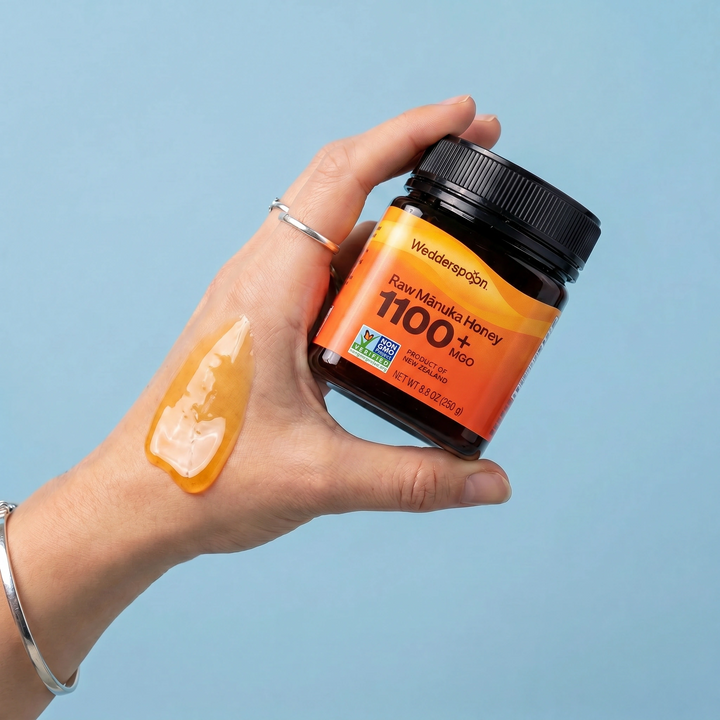
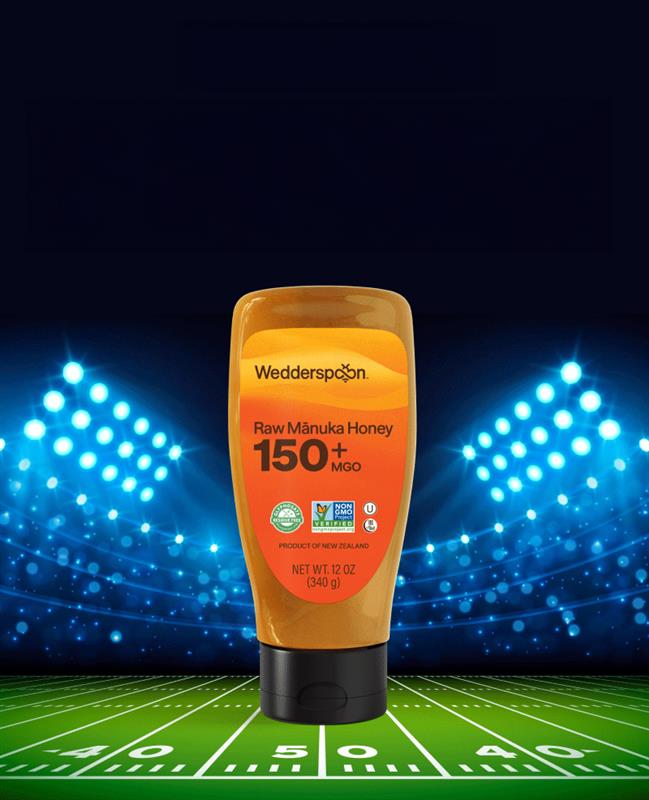
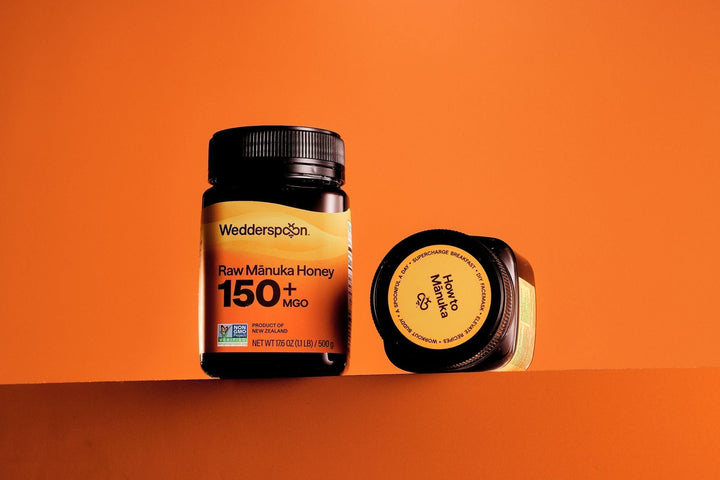
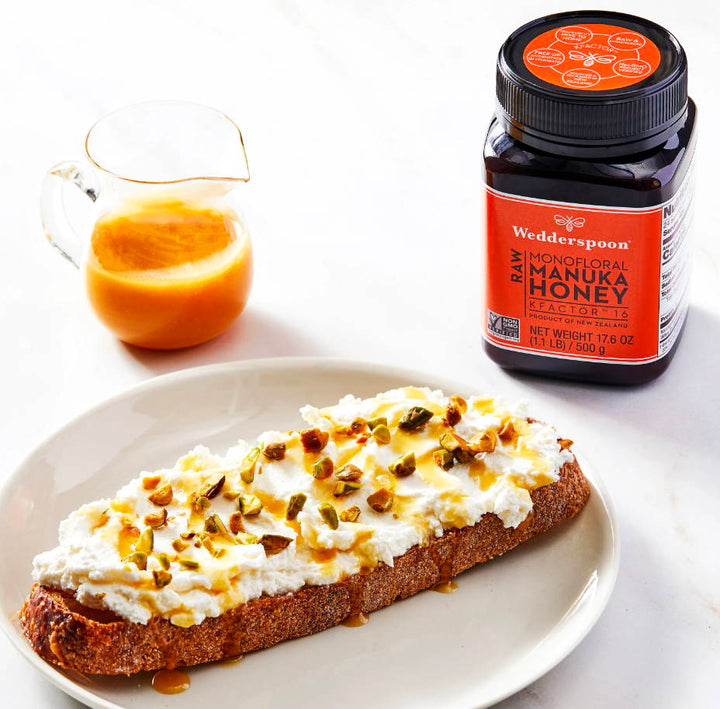
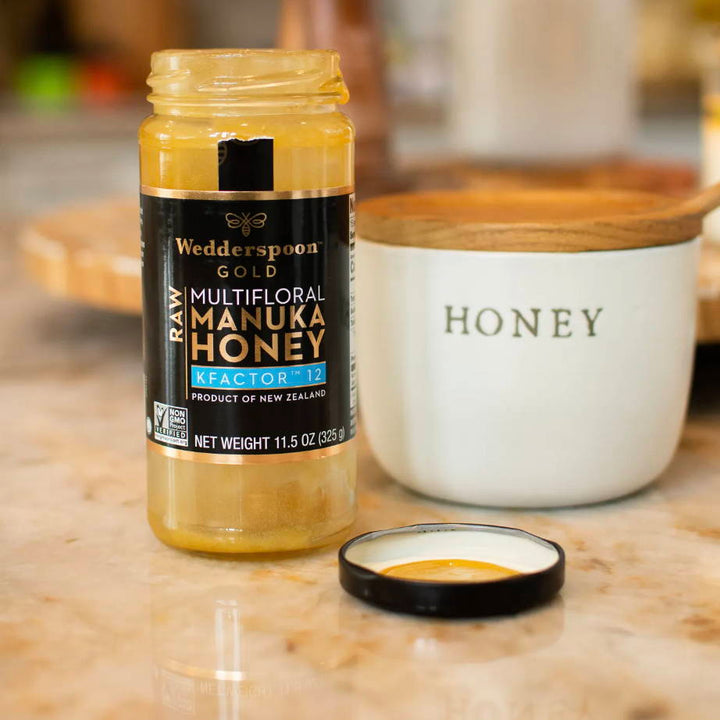
The MGO number is the one you'll see on the label — written as MGO __+ (for example, MGO 100+ or MGO 400+). It's independently lab-verified, and it's become the standard most US shoppers look for because, unlike some other rating systems, it's a straightforward number: higher means stronger.
It's more than one compound, though
MGO gets top billing, but Mānuka Honey isn't a one-ingredient story. It also contains polyphenols and flavonoids (including quercetin, luteolin, and kaempferol), plus antioxidants that help neutralize free radicals from everyday stress. Some early research links these compounds to immune modulation, though the science here is still developing, and I'm not going to tell you a spoonful of honey is going to supercharge your immune system. It's a genuinely complex bioactive food, and that's a fair way to think about it.
There's also a prebiotic angle worth knowing: Mānuka Honey contains oligosaccharides, non-digestible carbohydrates that make up roughly 5–10% of the honey and reach the gut mostly intact. Some research suggests they may selectively feed beneficial gut bacteria like Lactobacillus and Bifidobacterium. Worth noting: a prebiotic isn't the same as a probiotic — there's no live bacteria added here, just potential food for the good bacteria already living in your gut. And most of that evidence is still in early-stage or animal studies, so "may support" is more accurate than any bigger claim.
Why "raw" matters
Good Mānuka Honey is never pasteurized or heat-treated. That's what "raw" means on the label — it preserves the natural enzymes and compounds (including that all-important MGO) instead of cooking them out. If you see a jar that's been heat-processed, you're likely getting a less potent product, whatever the label says.
FAQ
Is Mānuka Honey the same as regular honey? No. Regular honey comes from bees foraging a mix of flowers. Mānuka Honey comes specifically from the Mānuka bush and contains compounds — MGO and Leptosperin in particular — that aren't found at meaningful levels in other honeys.
What does the MGO number mean? It's a direct measurement, in mg/kg, of methylglyoxal — the compound responsible for Mānuka Honey's antibacterial strength. Always look for it written as MGO followed by a number and a plus sign (MGO 50+, MGO 100+, and so on). Higher numbers mean higher potency.
Is raw Mānuka Honey safe to eat every day? For most healthy adults, yes — it's used the way any honey is, in food and drinks. As with any honey, it's not recommended for infants under one year old. If you have specific health conditions, it's worth checking with a doctor.
Does Mānuka Honey expire? Raw honey is shelf-stable for a very long time when stored properly (sealed, room temperature, out of direct sunlight), though quality and potency are best within the timeframe on the label.
Share this post